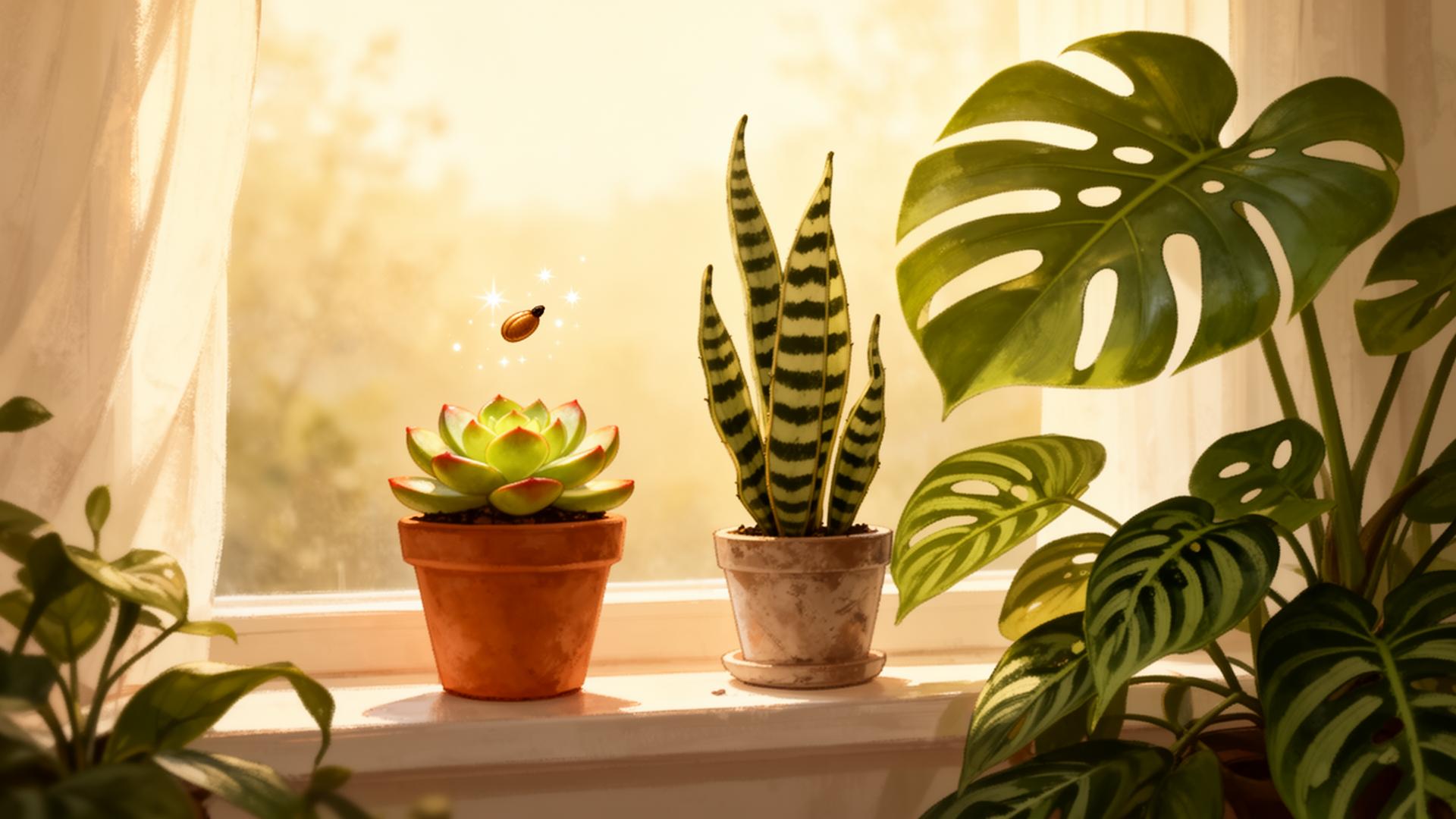
10 Uncommon Things Your Houseplants Do (That You'd Never Believe)
By Planthead Team · Jun 10, 2026
You bought a houseplant. You named it Gerald. You assumed Gerald would sit quietly in the corner and photosynthesize like a polite roommate.
Plot twist: your plants have a whole secret life. They flinch, they pray, they spit seeds across the room, they whisper to each other through the air. Here are ten of the strangest, most delightful things houseplants actually do — most of them happening in your living room right now.
1. Madagascar Jewel spits seeds across the room
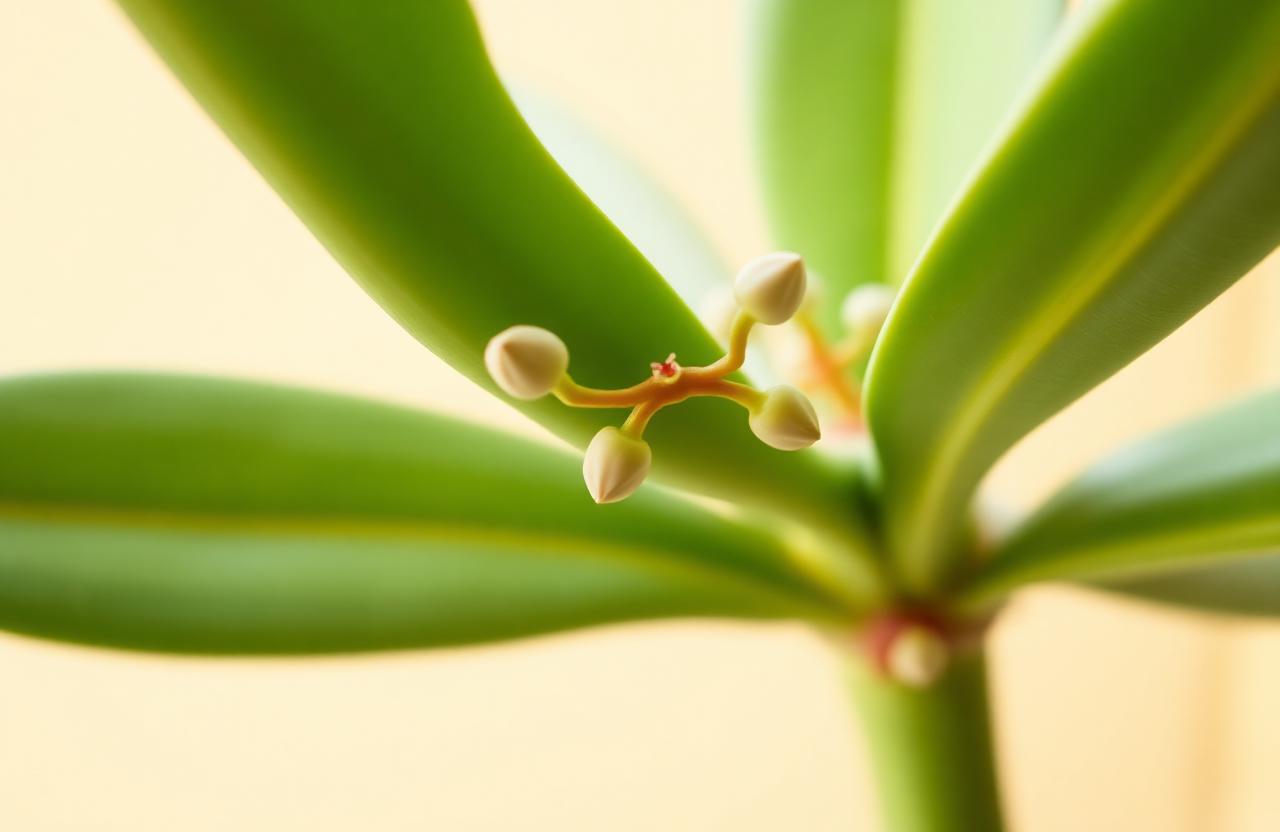
Plant: Euphorbia leuconeura. When its seed pods ripen, they don't just drop — they explode. Tiny seeds get launched up to a couple of meters, ricochet off the wall, and germinate in your other pots like uninvited cousins. People often find baby Madagascar Jewels growing in the cactus next door and have no idea how they got there.
Why: ballistic dispersal. In the wild it spreads the gene pool away from the parent plant. In your home it spreads tiny succulents into your monstera.
2. Prayer Plant folds its hands at night
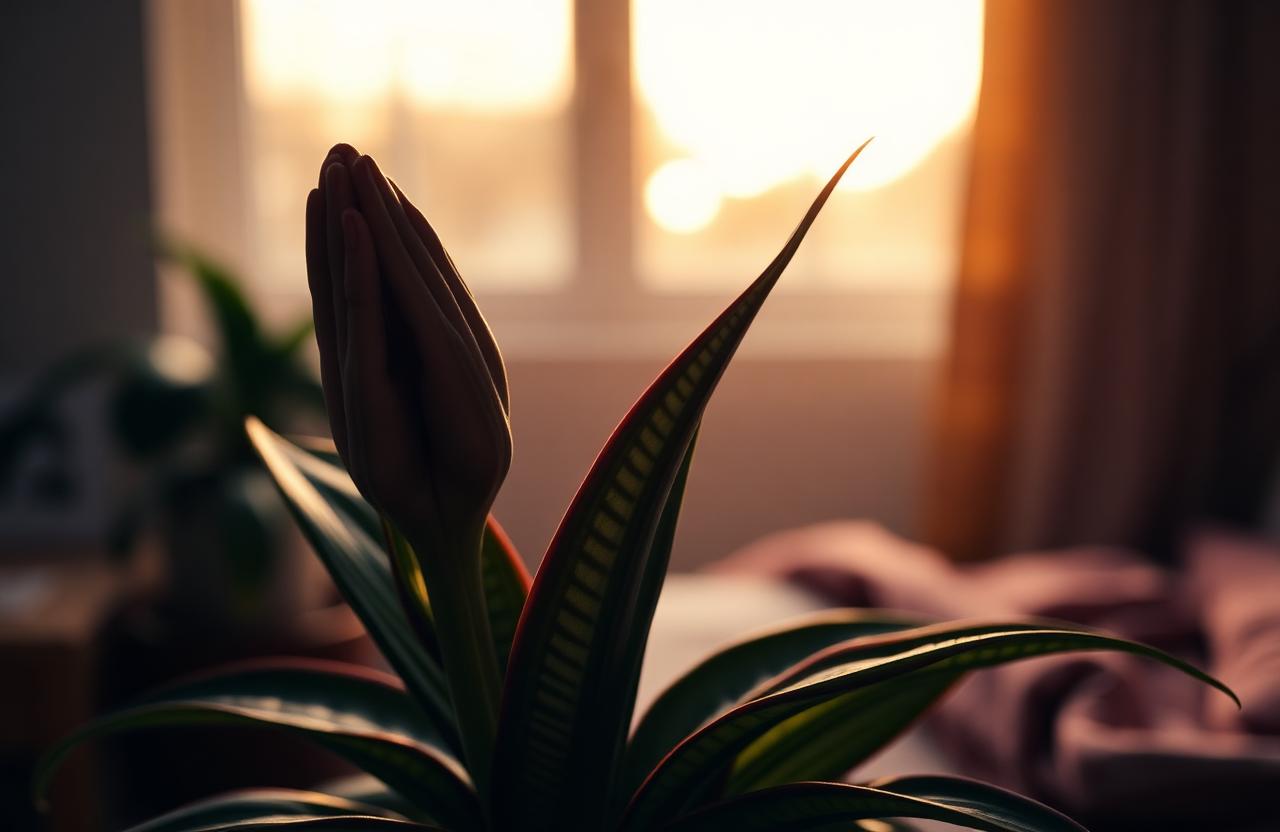
Plant: Maranta leuconeura (and most of its calathea cousins). Every evening their leaves rise up and fold together like little praying hands. By morning they flatten out again.
Why: it's called nyctinasty. Tiny "pulvinus" joints at the base of each leaf pump water in and out, swelling and shrinking on a circadian rhythm — basically a built-in clock.
3. Sensitive Plant collapses the second you touch it
Plant: Mimosa pudica. Brush a leaf and the whole frond folds in on itself within a second, like a stage faint. Wait a few minutes and it perks back up.
Why: "seismonasty" — a defensive electric signal travels down the leaf, water rushes out of pulvinus cells, and the leaf collapses to look smaller, drier, and less appetizing to whatever just touched it.
4. Telegraph Plant actually dances
Plant: Codariocalyx motorius. Each big leaf has two tiny "ear" leaflets that rotate in little ellipses — fast enough that you can watch them move with the naked eye. Darwin was obsessed with this one.
Why: nobody is 100% sure. The leading theory is that the leaflets sample sunlight from different angles to point the main leaf where it'll catch the most light.
5. Your pothos is gossiping with the snake plant
Plant: basically all of them, but pothos, monstera, and snake plants are easy to observe at home. When one plant is stressed (drought, pest attack), it releases volatile chemicals into the air. Nearby plants detect them and pre-emptively ramp up their own defenses.
Why: it's a chemical group chat. Grouping plants together isn't just aesthetic — it makes each one a little tougher.
6. Oxalis triangularis runs on a daily clock
Plant: Oxalis triangularis, aka False Shamrock. Those purple butterfly leaves don't just sit there. They open in the morning and snap shut at night like a tiny umbrella closing.
Why: photonasty. The plant tracks light to maximize photosynthesis by day and minimize water loss by night.
7. Bird of Paradise rips its own leaves on purpose
Plant: Strelitzia. Notice those clean splits along the veins of mature leaves? The plant did that to itself.
Why: big paddle leaves catch wind like a sail. Splitting along predictable lines lets the wind pass through instead of shredding the leaf or snapping the stem. It's evolutionary self-piercing.
8. Monstera grows holes only when it feels safe
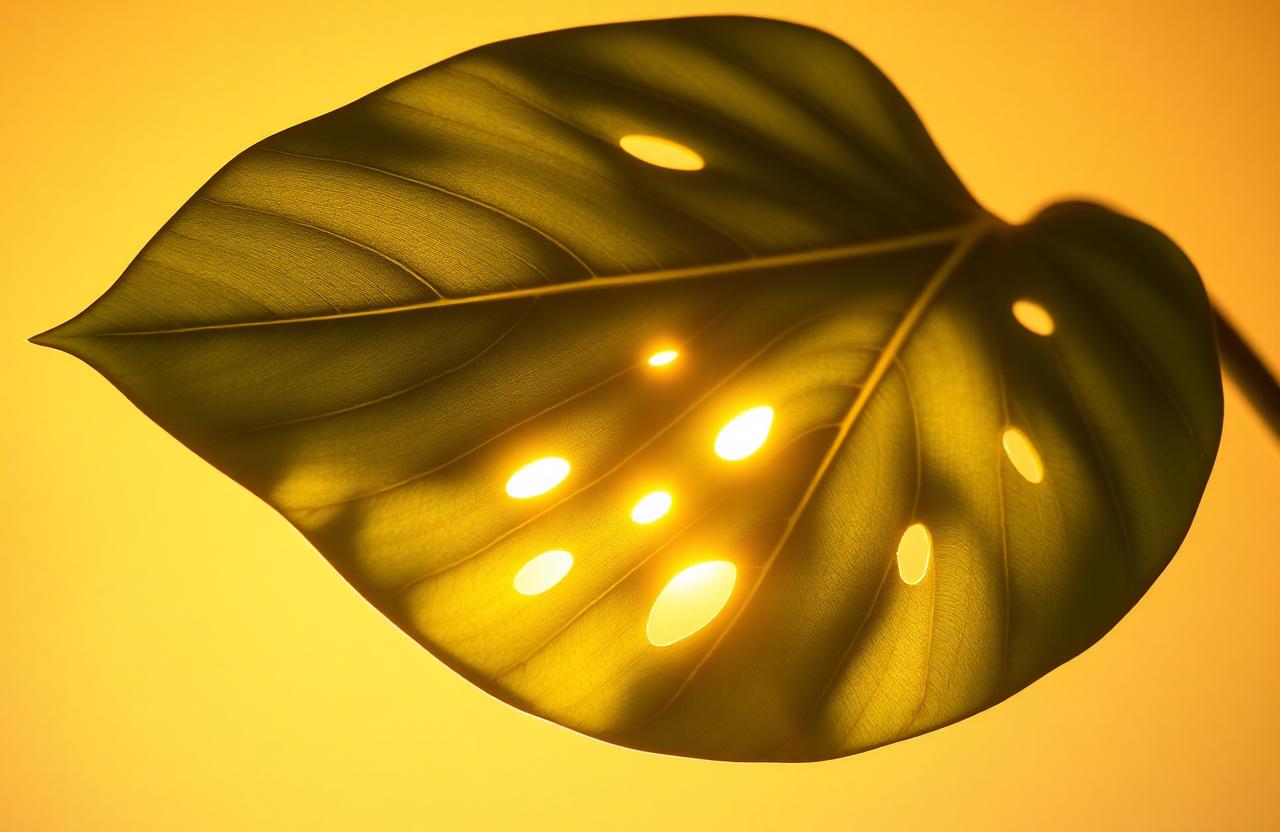
Plant: Monstera deliciosa. The iconic holes ("fenestrations") aren't a baby feature — juvenile leaves are solid. The famous Swiss-cheese look only appears once the plant feels mature, well-lit, and well-fed.
Why: the fenestrations let light pass through to lower leaves in the rainforest canopy and let storm winds through without tearing. In your living room, they're a compliment: it means Monstera thinks you're doing a good job.
9. Spider plants are cloning themselves on your shelf
Plant: Chlorophytum comosum. Those dangling "babies" on long arching runners? They're genetically identical clones. The runners are called stolons, and each baby will happily root if it touches soil — or water — or honestly any vaguely moist surface.
Why: vegetative reproduction. Faster than seeds and a backup if pollinators don't show up. Also: free plants forever.
10. Snake plant breathes at night
Plant: Dracaena trifasciata (formerly Sansevieria). Most plants open their stomata during the day to take in CO₂ — but snake plants flip the schedule and open theirs at night.
Why: CAM photosynthesis, evolved in arid climates to lose less water. The cozy side effect: a snake plant in your bedroom is quietly releasing oxygen while you sleep. It's the only roommate who exhales fresh air at 3 a.m.
So next time Gerald looks like he's just sitting there: he's probably tracking the light, whispering chemistry at his neighbor, and getting ready to fling a seed at your wall. Houseplants are doing the most. We just rarely notice.
Now go check on your prayer plant — it's almost bedtime. 🌙
Keep reading 🌿
Grow with Planthead 🌱
Track watering, log growth, earn badges. The app for accidental jungle owners.
Open the app