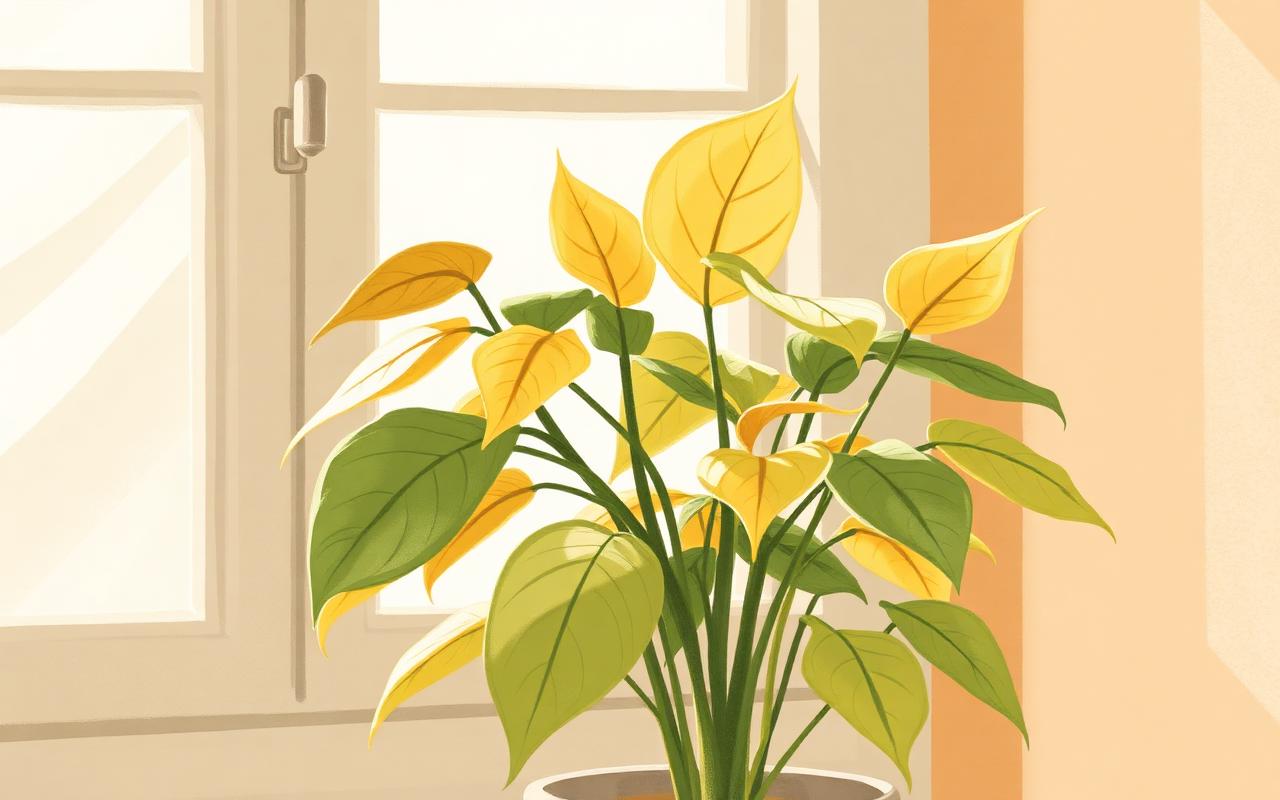
Why Do My Plant's Leaves Keep Turning Yellow? (A Plant Parent's Guide)
By Planthead Team · Jun 29, 2026
Yellow leaves. The universal plant-parent panic button. One minute you''re proudly admiring your pothos, the next you spot a sad, custard-colored leaf and spiral into "am I a monster?" territory.
Take a breath. A yellow leaf is not a death sentence — it''s a clue. Plants can''t text, so they communicate in the only language they have: leaves. Your job is to read the message.
Here are the most common reasons your plant''s leaves are turning yellow, and what to actually do about each one.
1. Overwatering (the #1 culprit)
If you only remember one thing from this guide, make it this: more plants die from love than from neglect. Overwatering suffocates the roots, they start to rot, and the plant can''t move water and nutrients up to the leaves. The result? Soft, droopy, yellow leaves — often starting from the bottom.
Signs it''s overwatering:
- Soil is constantly wet or smells musty
- Yellow leaves feel soft or mushy
- Stems are squishy near the base
- You see fungus gnats hovering around the pot
Fix it: Let the top 2–3 cm of soil dry out before watering again. Check that your pot actually has drainage holes (a shocking number don''t). If the soil stays soggy for days, repot into something chunkier and more breathable.
2. Underwatering
The opposite problem looks surprisingly similar. A thirsty plant will also yellow its lower leaves to ration water for the new growth up top. The difference is in the texture.
Signs it''s underwatering:
- Soil is bone-dry and pulling away from the pot edges
- Yellow leaves are crispy, not mushy
- The whole plant looks a little deflated
- Water runs straight through without soaking in
Fix it: Give it a deep drink — bottom-watering for 20 minutes works wonders for hydrophobic soil. Then set a more honest watering schedule.
3. Too much (or too little) light
Light is food. Get it wrong and the leaves are the first to complain.
- Too much direct sun scorches leaves into pale yellow or bleached patches, often on the side facing the window.
- Too little light causes slow, all-over yellowing as the plant runs out of energy to keep its leaves alive.
Fix it: Move sun-burned plants a metre back from the window or behind a sheer curtain. Move sad, etiolated plants closer to a bright window — or invest in a small grow light if your flat is a cave.
4. Nutrient deficiency
If you''ve had the same plant in the same soil for over a year and never fertilized, congratulations — your plant has been living off scraps. Yellowing between green veins (chlorosis) is a classic sign of a nitrogen, iron, or magnesium deficiency.
Fix it: Feed with a balanced, diluted liquid fertilizer every 2–4 weeks during spring and summer. Ease off in winter when growth slows.
5. The pot is too small
Roots circling the inside of the pot like spaghetti? Water draining out instantly because there''s barely any soil left? Your plant has outgrown its home. Cramped roots can''t absorb nutrients properly, and yellow leaves follow.
Fix it: Repot into a container 2–4 cm wider in diameter. Not bigger — too much extra soil holds water and brings us right back to problem #1.
6. Sudden environment change
Plants are creatures of habit. Move them across the room, crank up the heating, or bring them home from the shop — and they may yellow a few leaves out of sheer drama. This is called transplant or relocation shock.
Fix it: Don''t panic and don''t over-correct. Keep watering and lighting consistent for 2–3 weeks and let them adjust.
7. Pests
Spider mites, mealybugs, and thrips are tiny vampires. They suck the sap out of leaves, leaving behind yellow stippling, sticky residue, or fine webbing.
Fix it: Inspect the undersides of leaves and the stem joints. Wipe down with diluted insecticidal soap or neem oil, isolate the plant from its neighbours, and repeat weekly until you''re sure they''re gone.
8. It''s just old
Sometimes a yellow leaf is just… a leaf doing its thing. The oldest, lowest leaves of a healthy plant naturally yellow and drop as the plant puts energy into new growth. If your plant looks otherwise lush and is pushing out new leaves, a single yellow elder is nothing to mourn.
Fix it: Snip it off at the base with clean scissors. Pour one out. Move on.
A quick diagnostic
Before you do anything drastic, ask yourself:
- Where is the yellowing — bottom leaves, top leaves, or everywhere?
- What does it feel like — mushy, crispy, or normal?
- What changed recently — new spot, new pot, new season, new schedule?
- When did you last water and fertilize?
Nine times out of ten, the answer is hiding in those four questions.
The cozy truth
Every plant parent kills a few leaves. It''s how you learn. Yellow leaves aren''t a verdict on your worth as a human — they''re a conversation. The more you listen, the better you get at speaking plant.
And if you want to stop guessing? Track your watering, light, and care notes in Planthead, so the next time a leaf goes yellow, you''ve got the receipts to figure out why. 🌱
Grow with us 🌱
Planthead isn't just an app — it's a little community of people who talk to their plants, name their pothos, and genuinely panic over a yellow leaf. We're building it so you don't have to figure this stuff out alone.
Inside the app you can:
- Track each plant — watering, light, fertilizing, and the weird quirks only you notice
- Spot problems early — log a yellow leaf today, see the pattern next month
- Ask the community — share a photo, get answers from people whose plants have survived the same drama
- Celebrate the wins — new growth, first bloom, the cactus that finally forgave you
The more plant parents we have, the better the advice gets — so if Planthead has helped you, invite a friend (especially the one whose monstera is mysteriously crispy). Their plants will thank you, and so will ours. 💚
Keep reading 🌿
Grow with Planthead 🌱
Track watering, log growth, earn badges. The app for accidental jungle owners.
Open the app